Skip to content
Vestland Classic
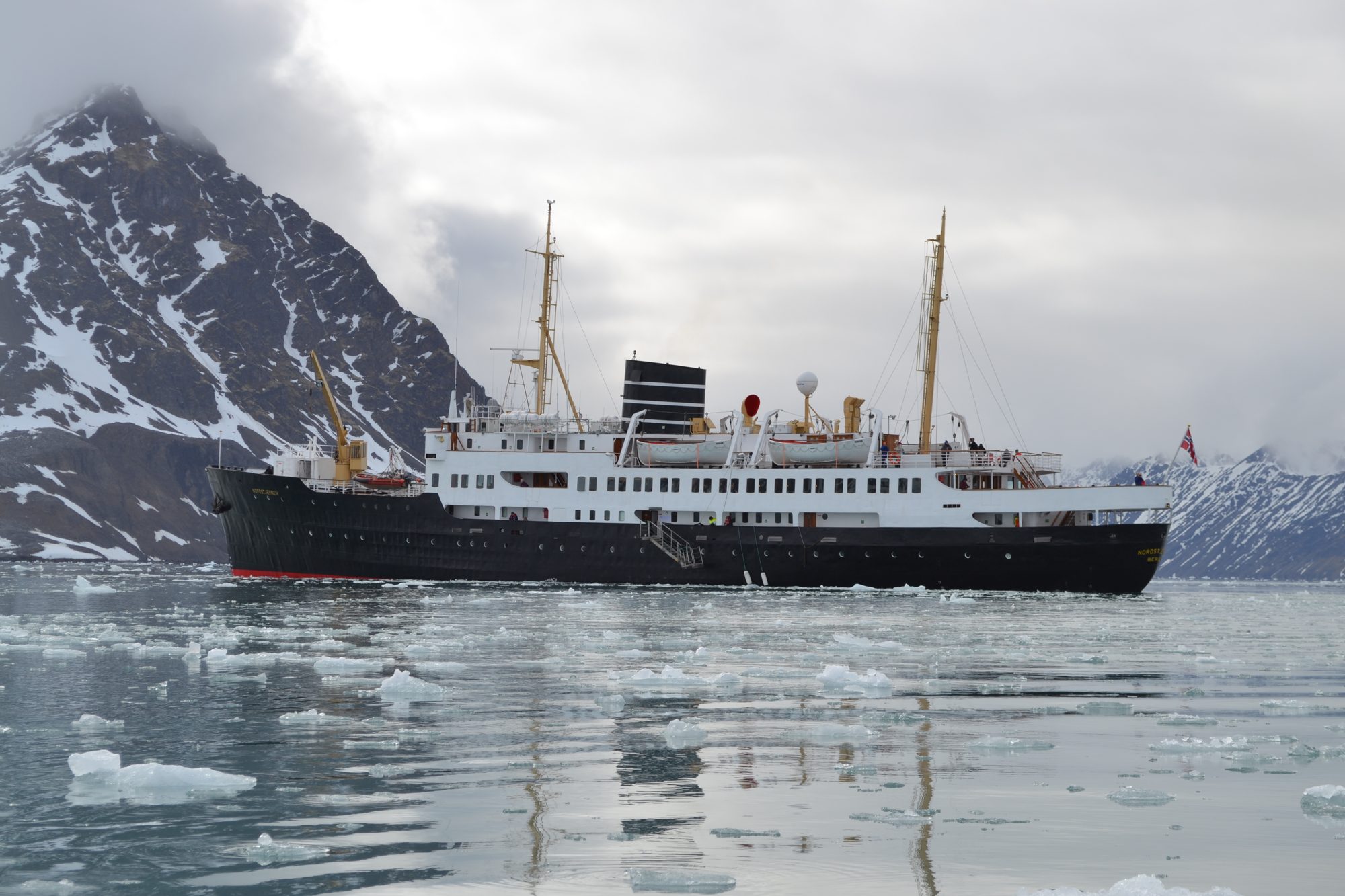
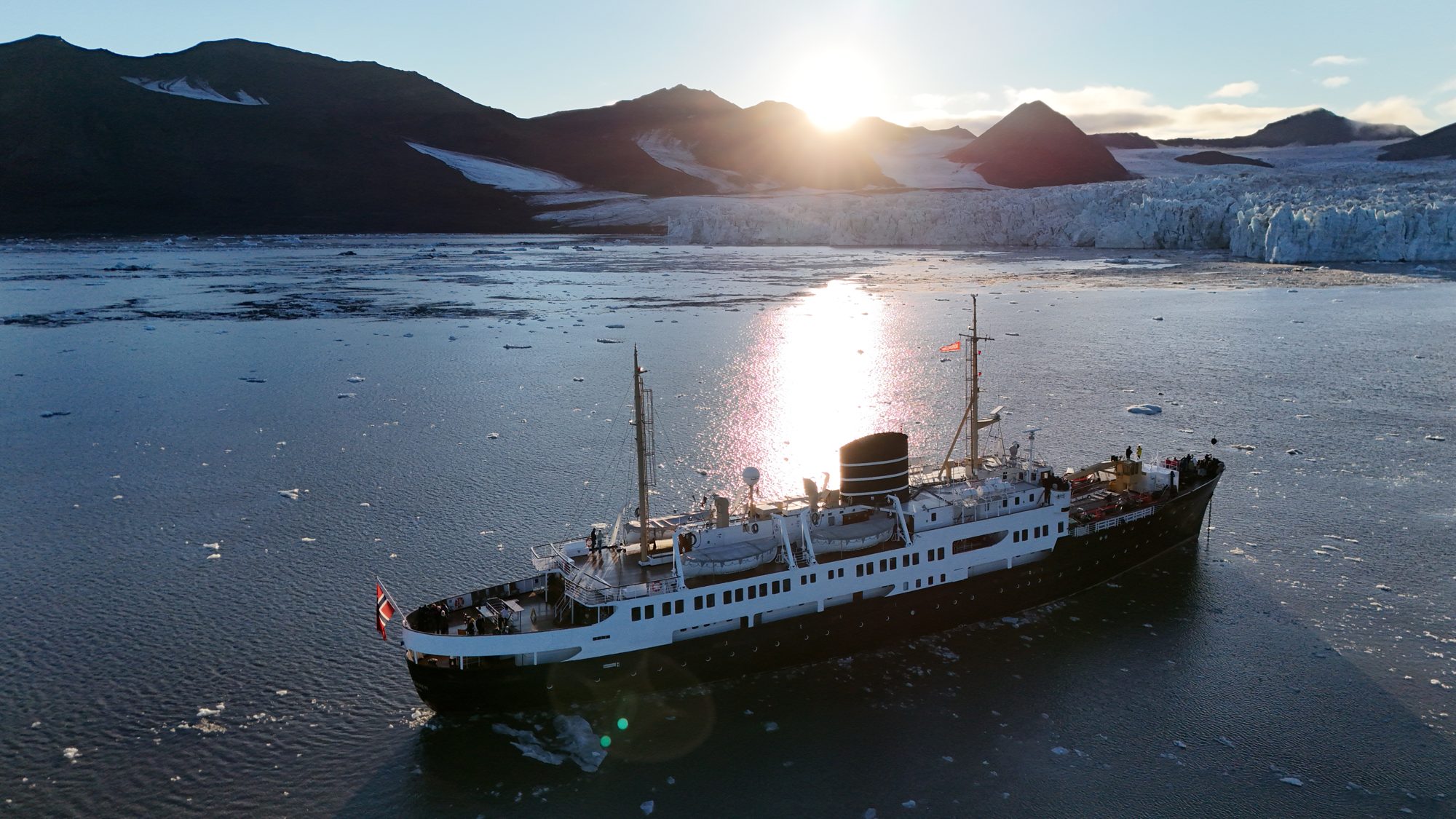
M/S Nordstjernen sailing through Arctic waters

The story of

M/S Nordstjernen

A living piece of Norwegian maritime history.

M/S Nordstjernen sailing through Arctic waters

The beginning

Built for the Norwegian coast

Since the summer of 1893, a combined mail, passenger and cargo express line has connected the remote ports of northern Norway with the south of the country and the world beyond. It quickly became the preferred way to travel in the demanding conditions of the Arctic north — for local communities and for travellers alike. The name Hurtigruten became a trademark known far outside Norway.

Bergenske Dampskibsselskab, known internationally as the Bergen Line, was the most important shipping company of the old Hanseatic city of Bergen — the southernmost port and main hub of the Hurtigruten service — and had been part of the operation since 1894.

A new Nordstjernen — M/S Nordstjernen

1954 – 1956

A new Nordstjernen

Bergen Line ordered Nordstjernen as an urgent replacement for the company's former flagship of the same name, built in 1937 and lost after grounding in Raftsundet in September 1954. The order for a new passenger, mail and cargo vessel went to the Blohm & Voss shipyard in Hamburg, which had only recently recovered from the heavy war damage of the last months of the Second World War. Restrictions on German shipbuilding were lifted in 1953, and the yard was eager for international orders. It could guarantee delivery in spring 1956, which suited Bergen Line very well.

The contract was signed in December 1954 and work on hull number 787 began immediately. Material shortages delayed the keel laying until the summer of 1955, but progress was good thereafter and the ship was launched into the river Elbe on 26 October 1955.

Fitting out posed no further problems, and on 24 February 1956 — a few days ahead of schedule — the new Nordstjernen was delivered to Bergen Line. She measured 2,194 gross register tons, with a length of 80.77 metres, a beam of 12.6 metres and a draught of 4.5 metres. She could carry 450 passengers, 195 of them in first and second class cabins, and up to 645 tons of cargo in two forward holds. A single 3,000 hp six-cylinder Burmeister & Wain two-stroke diesel driving a variable-pitch propeller gave her a top speed of 15.5 knots.

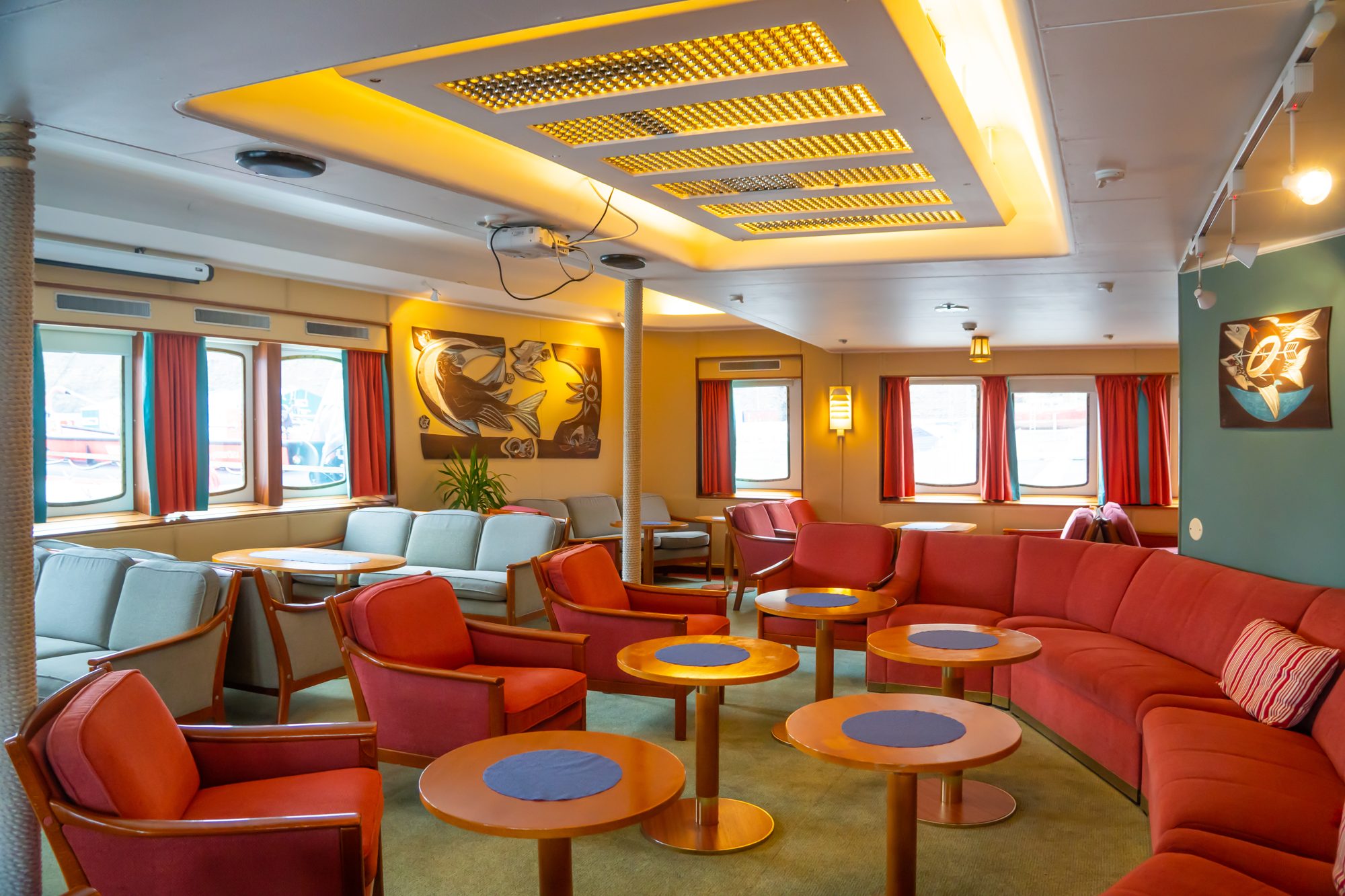
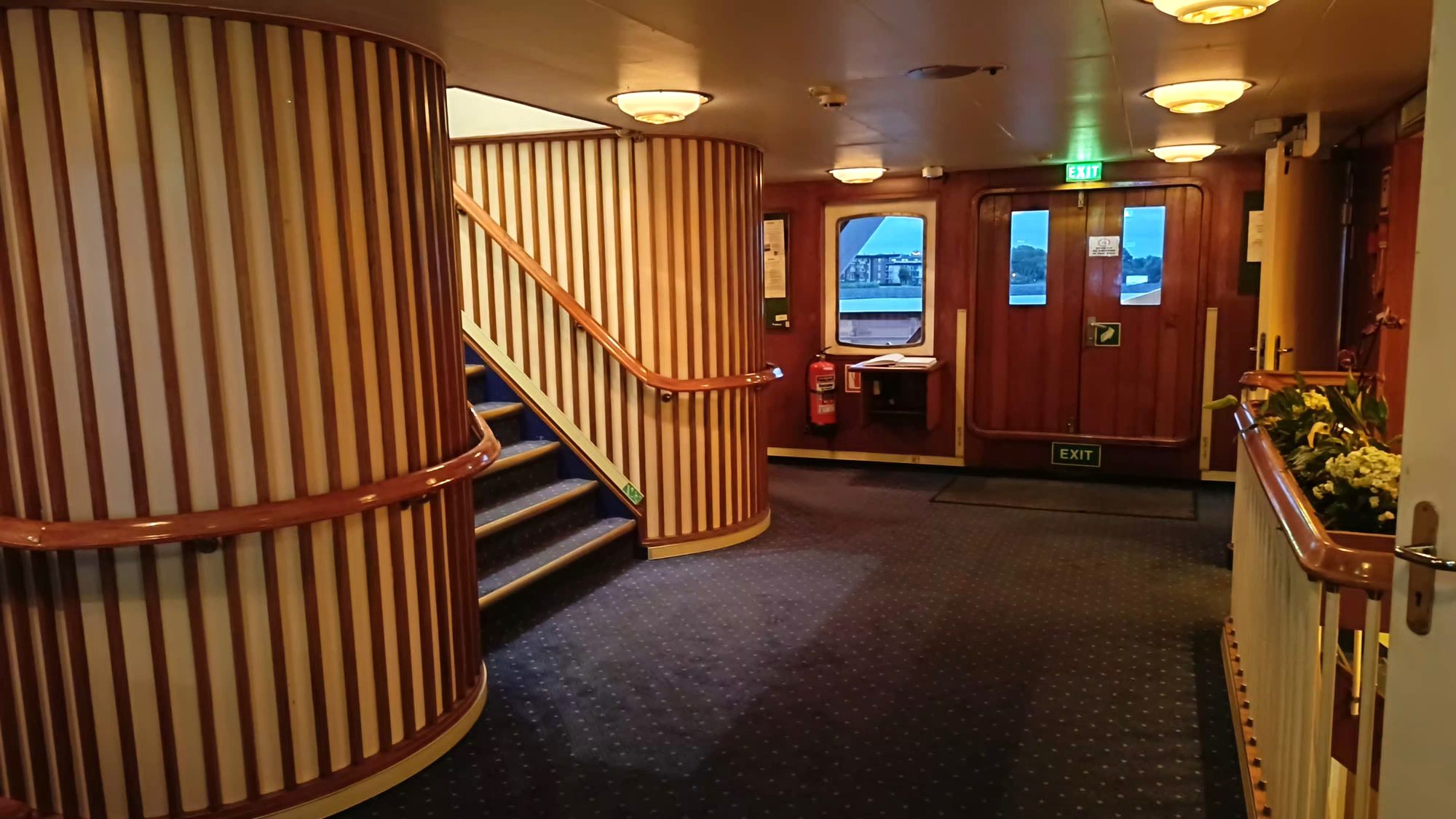
The interior layout was kept simple, with all public rooms on one deck: the first class section forward with a comfortable lounge, the entrance hall and dining room, and the second class section aft with a cafeteria and a second lounge. The standard of decoration was unusually high, with work by the celebrated Norwegian artist Paul René Gauguin. Almost all of that artwork is still in place today.
Hurtigruten years — M/S Nordstjernen

1956 – 1979

Hurtigruten years

Nordstjernen entered the Hurtigruten service on 1 March 1956 and soon became one of the most popular and successful ships in the coastal service.

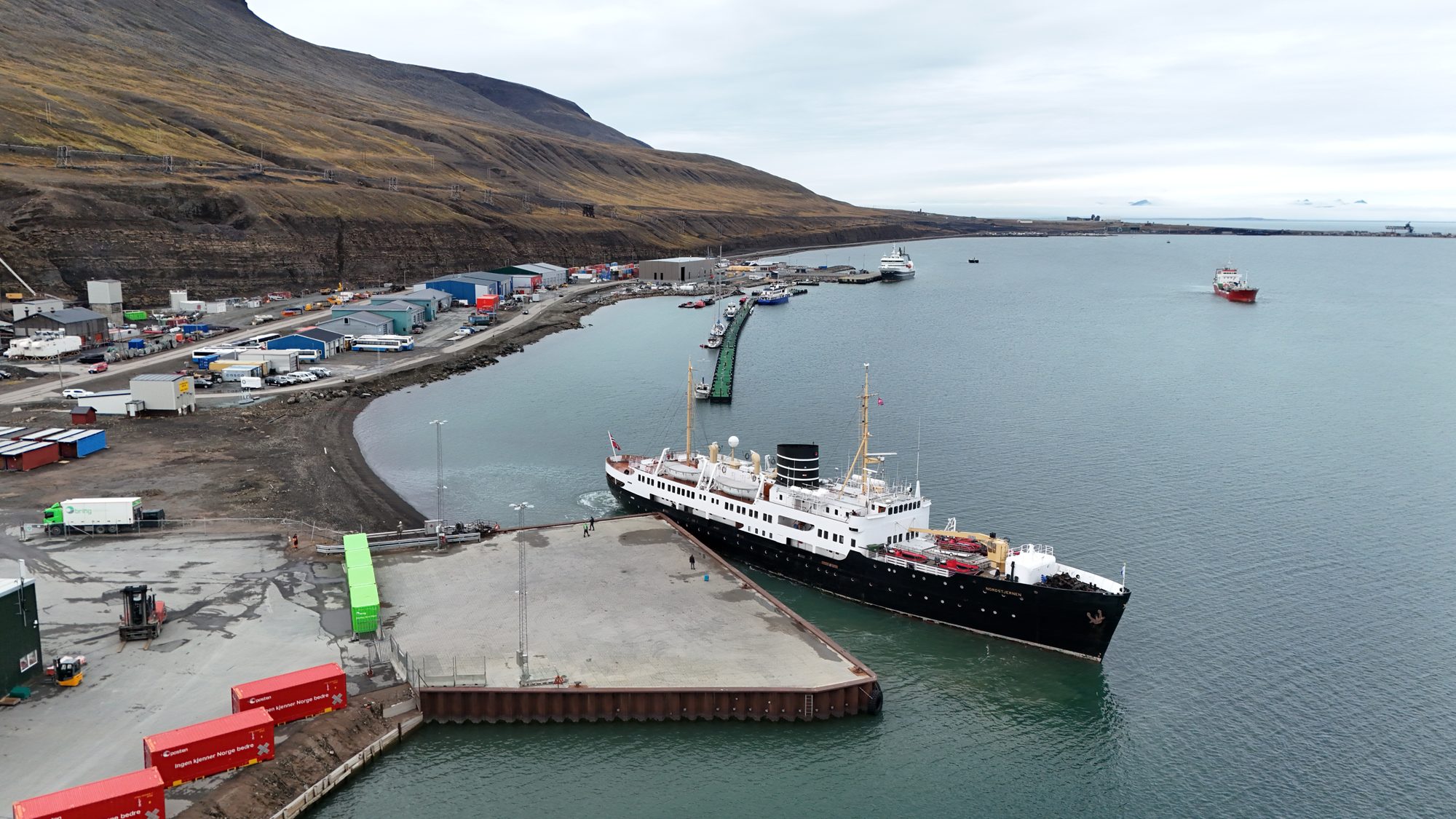
In 1968 came new challenges. Alongside the regular coastal sailings, the companies introduced a Svalbard Express service to Spitsbergen. Each company supplied its flagship, and for Bergen Line that was Nordstjernen. The route proved very attractive to travellers and was repeated every summer until 1982. From 1976 to 1979 spring cruises to the Shetland Islands were added to her programme.

January 1979 brought major change to the traditional Hurtigruten operation. Bergen Line announced its withdrawal after 85 years, and its share of the service — including four ships — was sold to Troms Fylkes Dampskipsselskap, a shipping company from northern Norway. Nordstjernen took the new company's house colours and her home port changed to Tromsø. Otherwise little changed: she carried on in the coastal service for her new owners.

M/S Nordstjernen sailing through Arctic waters
Rebuilt for a second life — M/S Nordstjernen

1982 – 1992

Rebuilt for a second life

The early 1980s brought a new generation of much larger Hurtigruten vessels with ro-ro loading, and the classic ships of the 1950s and 60s began to look dated. Some were retired; Nordstjernen instead received a major upgrade to fit her for further service.

The work was carried out during the winter of 1982–83 at the Mjellem & Karlsen yard in Bergen. Her ageing main engine was replaced with a new 3,600 hp eight-cylinder MaK four-stroke diesel, and her interior was thoroughly refurbished. The generation-old division into first and second class was abolished, many former first class cabins were rebuilt and private shower and toilet facilities added — reducing her capacity to 179 passengers.

On 23 March 1983 the modernised Nordstjernen left on her first voyage after the rebuild. The changes were judged a great success, and the more powerful engine raised her top speed to almost 19 knots. She remained a much-loved ship; the first wedding on board was celebrated in August 1984.

One night is still remembered above all others. During the New Year storm in the early hours of 1 January 1992, Nordstjernen was southbound off Ålesund. The wind rose to hurricane force, and the ship had to heave to for several hours, keeping clear of the shore in extremely difficult conditions before an exhausted crew brought her into Måløy hours behind schedule.

An unexpected Arctic career — M/S Nordstjernen

1994 – 2012

An unexpected Arctic career

By the early 1990s the last of the 1950s and 60s ships were clearly ageing. A new generation of large, cruise-ship-style vessels was planned, the first entering service in 1993, and one by one the old mailships were phased out. Nordstjernen's replacement, the new Nordlys, arrived in 1994, and everyone assumed her career was over.

It was not. Some at Troms Fylkes thought it far too early to retire a ship with a fairly new main engine and a recently upgraded interior. Remembering the successful Svalbard sailings of the 1970s, they decided she should run Spitsbergen trips from Tromsø in summer and serve as a relief vessel on the coastal route in winter. Her one-week Svalbard cruises from the summer of 1994 proved extremely successful and were repeated, with variations, every season until 2009.

In those years she returned often to the Hurtigruten service, mostly in winter and as a stand-in for ships that had been sold on, with the occasional cruise in between. She returned to Hamburg, where she was built, in 2003 and again for her 50th birthday in 2006. A little later she changed funnel colours for the second time, when the two remaining companies merged to form Hurtigruten ASA.

All good things come to an end. By 2012 Nordstjernen was surplus to requirements. She completed her final Hurtigruten voyage in March 2012, sailed a last Spitsbergen season that summer, and arrived back in her former home port of Bergen on 1 September 2012 after the repositioning voyage south.

A living heritage

Nordstjernen carries the story of the Norwegian coast in every deck, passage and polished detail.

M/S Nordstjernen sailing through Arctic waters

Nordstjernen today

A new chapter at sea

In November 2012 the ship was handed over to new owners and is today operated by Vestland Marine for classic voyages under the Vestland Classic name. At almost the same moment the Norwegian Directorate for Cultural Heritage protected Nordstjernen as an outstanding example of 1950s ship design, with technical and design features reaching back to the 1930s.

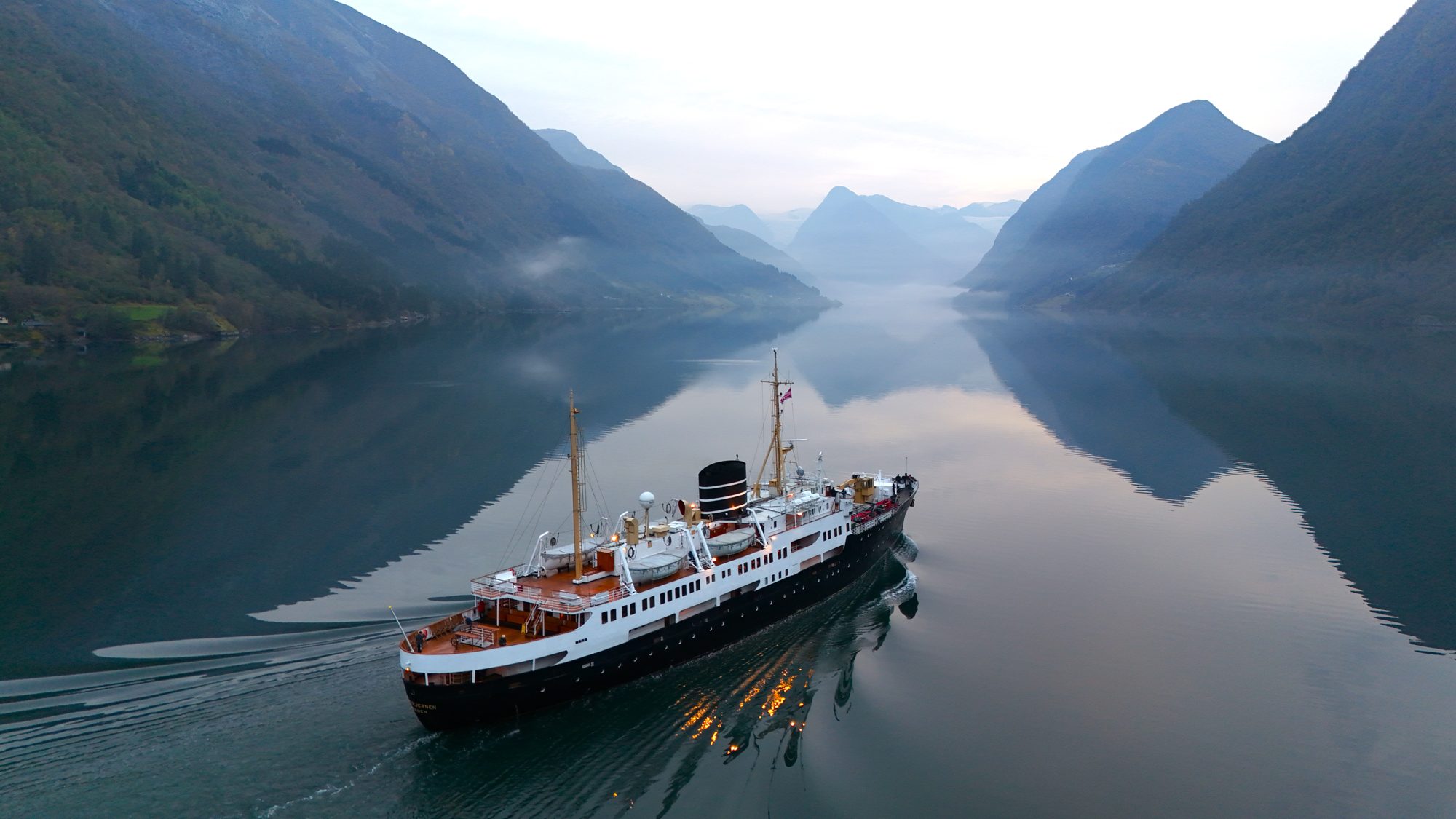
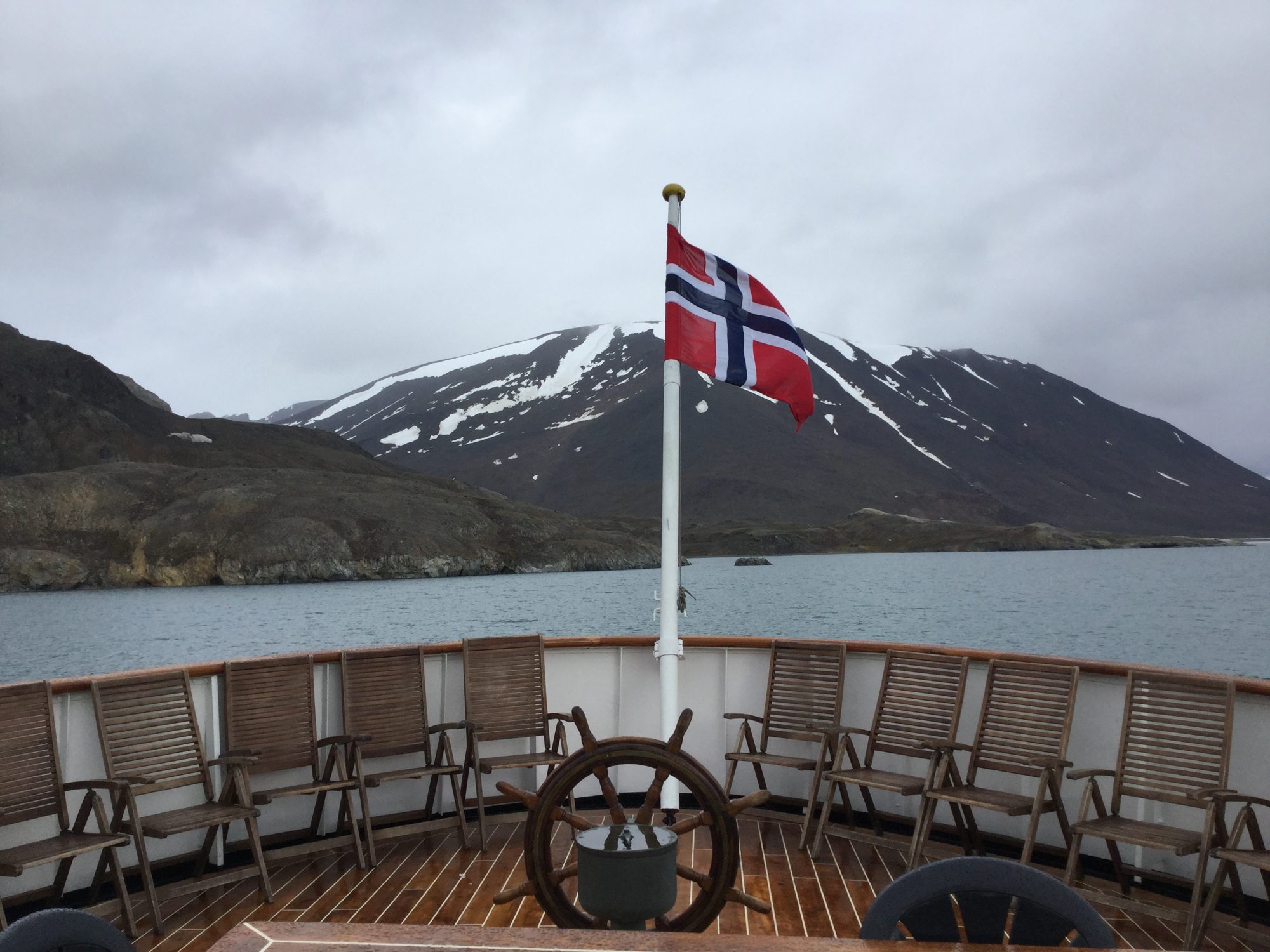
During the first half of 2013 she was given a thorough refit at a shipyard in Gdańsk, Poland. Her hull was sandblasted and repainted, the old Bergen Line funnel colours were applied once more, and her home port was changed back to Bergen. On 29 July she left Gdańsk for Bergen to be presented to the public at the Fjordsteam 2013 festival.

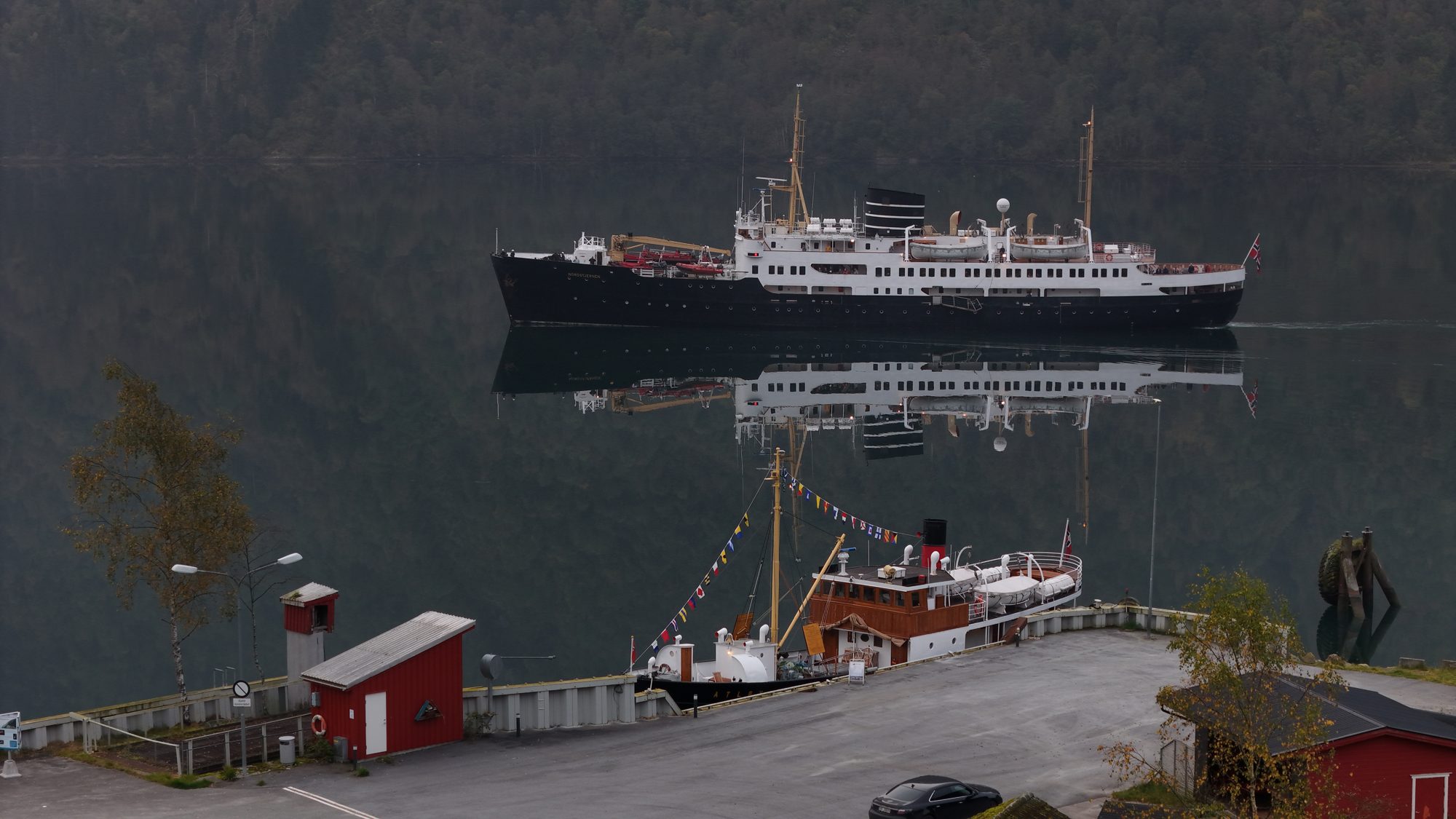
Since then she has sailed coastal voyages across northern Europe — the same ship, in the same hands as the sea, still carrying the artwork, panelling and proportions she was given in Hamburg in 1956.

Newsletter

News from the coast


New voyages, stories from on board and inspiration for your next journey — straight to your inbox.